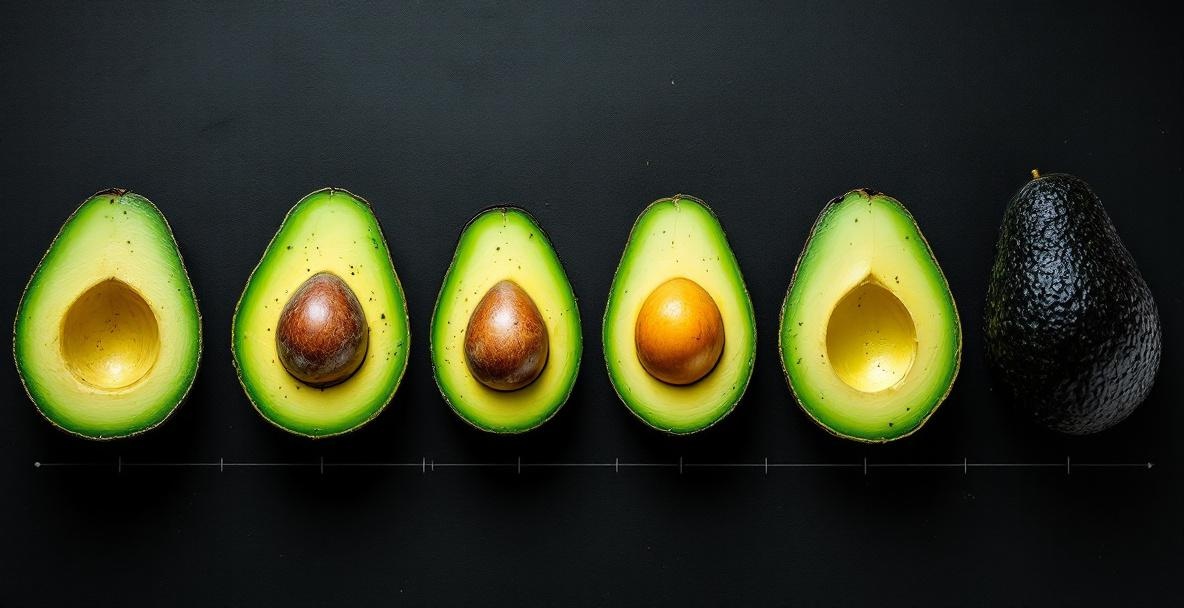
5 Avocado Ripeness Stages: Hard Green to Perfect
Ever bought six avocados that all ripened on the same Tuesday? You're not alone. Most people grab whatever looks decent at the store, then watch helplessly as their avocados go from rocks to mush overnight.
Avocado ripeness stages follow a predictable five-step progression that you can learn to read like a roadmap. Understanding these stages means buying strategically across multiple ripeness levels so you have perfect avocados all week long.
What Are the 5 Stages of Avocado Ripening?
Stage 1 avocados feel like tennis balls — hard, unyielding, with bright kelly green skin that has zero give when pressed. They smell like nothing and make a hollow sound when tapped. According to California Avocado Commission data, Stage 1 Hass avocados take 4-7 days to reach eating ripeness at room temperature.
Stage 2 brings the first hint of softness. The skin darkens slightly, and gentle pressure yields just a millimeter of give near the stem end. Think stress ball texture — firm but not rock-hard. These avocados develop a faint, sweet aroma when you smell the stem area.
Stage 3 is the sweet spot for eating fresh. The skin turns darker green or black (depending on variety), and gentle pressure creates a small indent that springs back slowly. A ripe avocado should feel like a ripe peach — yielding but not mushy.
Stage 4 avocados feel noticeably soft with significant give when pressed. The skin may show dark spots or slight wrinkiling. These work perfectly for guacamole or smoothies where texture matters less than flavor.
Stage 5 is overripe territory. The fruit feels mushy, may have large dark patches, and gives off a slightly fermented smell. Still edible for baking or face masks, but past prime eating quality.
Visual Guide: Avocado Color and Texture at Each Stage
| Stage | Color | Feel | Timeline | Best Use |
|---|---|---|---|---|
| 1 | Bright green | Tennis ball hard | 4-7 days to ripen | Buy for next week |
| 2 | Green, slight darkening | Firm with minimal give | 2-3 days to perfect | Slicing for salads |
| 3 | Dark green/black | Gentle give, springs back | Eat within 1-2 days | Toast, bowls, eating fresh |
| 4 | Very dark, possible spots | Soft throughout | Use immediately | Guacamole, smoothies |
| 5 | Dark spots, wrinkled | Mushy | Past prime | Baking, composting |
The UCLA Food Science Department found that avocados produce ethylene gas as they ripen, which accelerates the process. This explains why avocados grouped together ripen faster than solitary fruits.
How to Speed Up Avocado Ripening at Home
Paper bag method works because it traps ethylene gas around the fruit. Add a banana or apple to the bag — both produce high levels of ethylene that can cut ripening time by 24-48 hours according to USDA research.
Room temperature is ideal for ripening. Refrigeration halts the process entirely, while temperatures above 75°F can cause uneven ripening where the outside softens before the inside is ready.
Tired of guessing? AvoCadabra, the avocado ripeness checker app, uses your phone's camera to analyze avocado ripeness with 94% accuracy. Never waste money on bad avocados again — and GUAC the monkey approves of your smart shopping choices.
Smart Shopping Strategy: Buy Across Multiple Stages
The secret is buying avocados at different stages, not all at Stage 1. Professional chefs buy 30% Stage 1 (for next week), 40% Stage 2 (for mid-week), and 30% Stage 3 (for immediate use). This strategy, recommended by the Culinary Institute of America, ensures continuous avocado availability.
Hass avocados show color changes more dramatically than green varieties like Reed or Fuerte. With green varieties, focus on feel rather than color — the skin stays green even when perfectly ripe.
Why Your Avocado Is Brown Inside (And What It Means)
Brown streaks don't always mean bad fruit. According to research from the University of California Davis, brown vascular bundles are normal in mature avocados. However, uniform brown coloring throughout indicates oxidation from being overripe or damaged.
Black spots near the skin usually signal bruising from handling, while brown areas near the pit suggest the fruit was picked too early and never properly ripened.
Storage Tips for Each Ripeness Stage
Stage 1-2 avocados belong on your counter at room temperature. Once they hit Stage 3, refrigeration slows further ripening and extends eating window by 3-5 days. Stage 4 avocados should be used immediately or refrigerated for same-day use.
Never refrigerate unripe avocados — they'll never properly soften. The cold disrupts enzyme activity needed for proper ripening, leaving you with hard, flavorless fruit that never improves.
Master these five stages, and you'll never again stare at six identical rock-hard avocados wondering when you'll actually get to eat them. Smart buying means reading the ripeness stages and planning accordingly — your toast game will thank you.