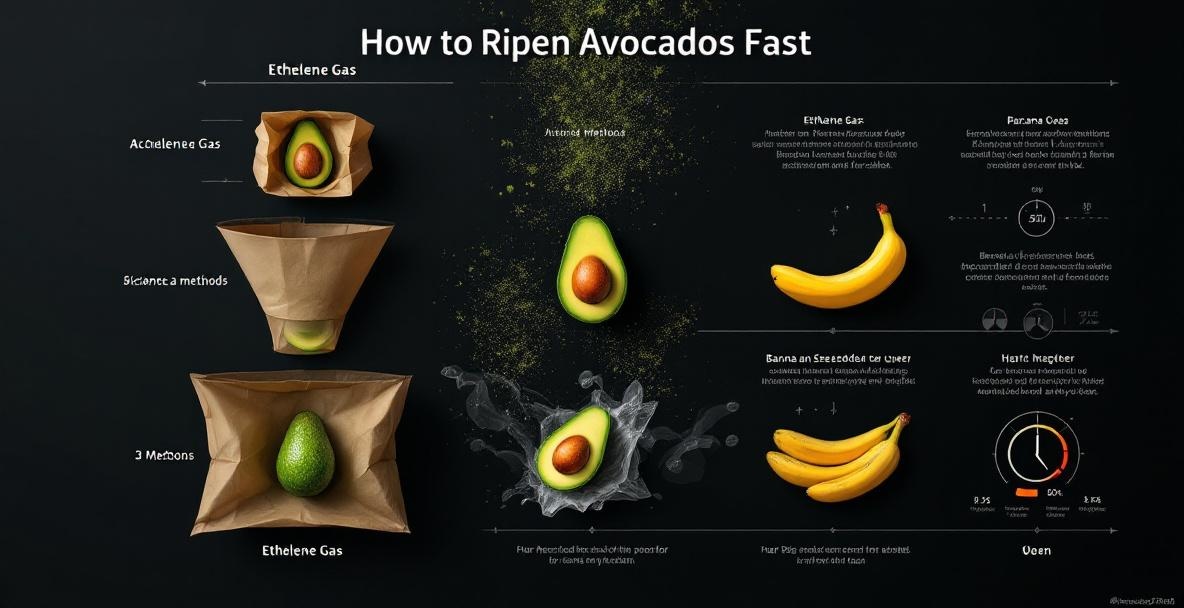
It's 5 PM. Your guac-loving guests arrive at 7. Your avocados feel like green rocks. Ripening avocados fast means understanding ethylene gas—the plant hormone that triggers the ripening process—and creating conditions that concentrate it around your fruit. Here's your evidence-based rescue plan.
Quick Answers: How to Ripen Avocado Fast
- Fastest single method: Paper bag with banana (12-24 hours). Bananas release concentrated ethylene gas.
- Most reliable: Rice bowl method (6-12 hours). Traps warmth and ethylene in a contained space.
- Last resort only: Oven at 200°F for 10-15 minutes. Softens texture but doesn't improve taste.
The Science Behind Avocado Ripening: Understanding Ethylene Gas
Ethylene gas is the invisible ripening trigger that converts starches to sugars and softens fruit tissue. Avocados produce ethylene naturally as they mature, but the process accelerates when ethylene concentrations build up in an enclosed space. According to research from UC Davis, ethylene gas concentration of 10-100 parts per million triggers ripening in most fruits, including avocados, within 24-72 hours depending on the fruit's maturity stage.
The key insight: you're not forcing ripeness, you're just creating a greenhouse effect for the ripening hormone your avocado is already producing. This is why plastic bags fail—they trap moisture but allow ethylene to escape. Paper bags trap both.
Method 1: The Paper Bag with Banana Boost (12-24 Hours)
Place your avocado in a paper bag with a ripe banana or apple, fold the top loosely, and check daily. The banana accelerates ripening by roughly 24-48 hours compared to bagging alone, according to research published in the Journal of the Science of Food and Agriculture. Bananas are ethylene-producing powerhouses—a single ripe banana emits approximately 60 times more ethylene than an unripe avocado.
Here's what to watch for: The avocado should yield slightly to gentle palm pressure after 12 hours. If it's still rock-hard after 18 hours, the avocado was likely picked too early, and you may need to switch methods. Check the skin around the stem—it should darken first, then the color spreads outward. Never squeeze hard; gentle pressure only.
Why this works better than just leaving it on the counter: you're concentrating ethylene in a confined space. A 2019 study from Postharvest Biology and Technology found that bagged fruit ripens 1.5-2x faster than exposed fruit at the same temperature.
Method 2: The Rice Bowl Trick (6-12 Hours)
Bury your avocado in uncooked rice in a covered container, and let warmth and trapped ethylene do the work. Rice works for two reasons: it traps both heat and ethylene, creating an accelerated ripening environment. The method typically works in 6-12 hours depending on how close the avocado was to ripeness when you started.
The temperature matters. Rice in a sealed container on a room-temperature counter ripens avocados in 8-10 hours. In a warm location (like near a sunny window or on top of the fridge), ripening happens in 6-8 hours. In cooler kitchens (below 65°F), expect the full 12 hours.
Check at the 6-hour mark by gently pressing near the stem. The avocado should feel slightly softer but not mushy. If you wait too long, you risk over-ripening and internal browning, which we'll address below.
Stop Guessing at Ripeness
AvoCadabra, the avocado ripeness checker app, uses your phone's camera to scan the avocado and predict ripeness within hours. No more squeezing fruit at the grocery store or discovering brown surprises at home. Learn more
Method 3: Emergency Oven Method (10-15 Minutes)
Preheat your oven to 200°F, place the avocado on a sheet, and heat for 10-15 minutes max. This is not a ripening method—it's a texture softening hack. The avocado won't develop more flavor or sugars, but it will become spreadable. Use only when you have no time and low expectations.
The caveat: higher temperatures (above 250°F) damage the flesh texture and can create a mealy, unpleasant consistency. At 200°F, the heat softens cell walls without destroying their structure. Never microwave an avocado; the uneven heating creates hot spots and ruins texture entirely.
Common Ripening Mistakes That Backfire
Plastic bags trap moisture, not ethylene, and often result in rot instead of ripening. Paper breathes; plastic suffocates. If you've bagged an avocado in plastic and it smells fermented after 12 hours, it's rotting, not ripening.
Refrigerating during ripening is another killer. Cold pauses the ethylene production process entirely. Once you move it back to room temperature, ripening restarts slowly. Refrigerate only after the avocado reaches your desired ripeness—then it stays good for 5-7 additional days.
Why Your Avocado Turned Brown Inside (And What It Means)
Internal browning happens when an avocado ripens unevenly or stays in an accelerated ripening environment too long. The ethylene-rich paper bag or rice bowl can over-ripen the inside faster than the outside skin darkens, creating a disconnect between appearance and actual ripeness. Check at the 12-hour mark with gentle pressure, not by cutting open.
If you've already cut into a brown avocado, it's safe to eat unless it smells fermented or rancid. Browning alone doesn't mean spoilage—it usually means timing and even ripening went slightly off. Next time, start checking at the 8-hour mark instead.
The One Number That Matters
Realistic "fast" ripening means 12-24 hours, not minutes or hours. There is no legitimate way to ripen an avocado from rock-hard to perfect guac in under 6 hours without compromising quality. If you see online claims of 5-minute ripening, they're either using pre-ripened avocados or selling you fiction.
Your move: Start with the paper bag method tonight for tomorrow's gathering. Check at 12 hours. If you need it for today, the rice bowl method is your only realistic option, and even that needs 6 hours minimum. Plan ahead when possible; accelerate only when necessary.
The best way to never need emergency ripening? Check your avocado status today for tomorrow's meal, not the other way around.